
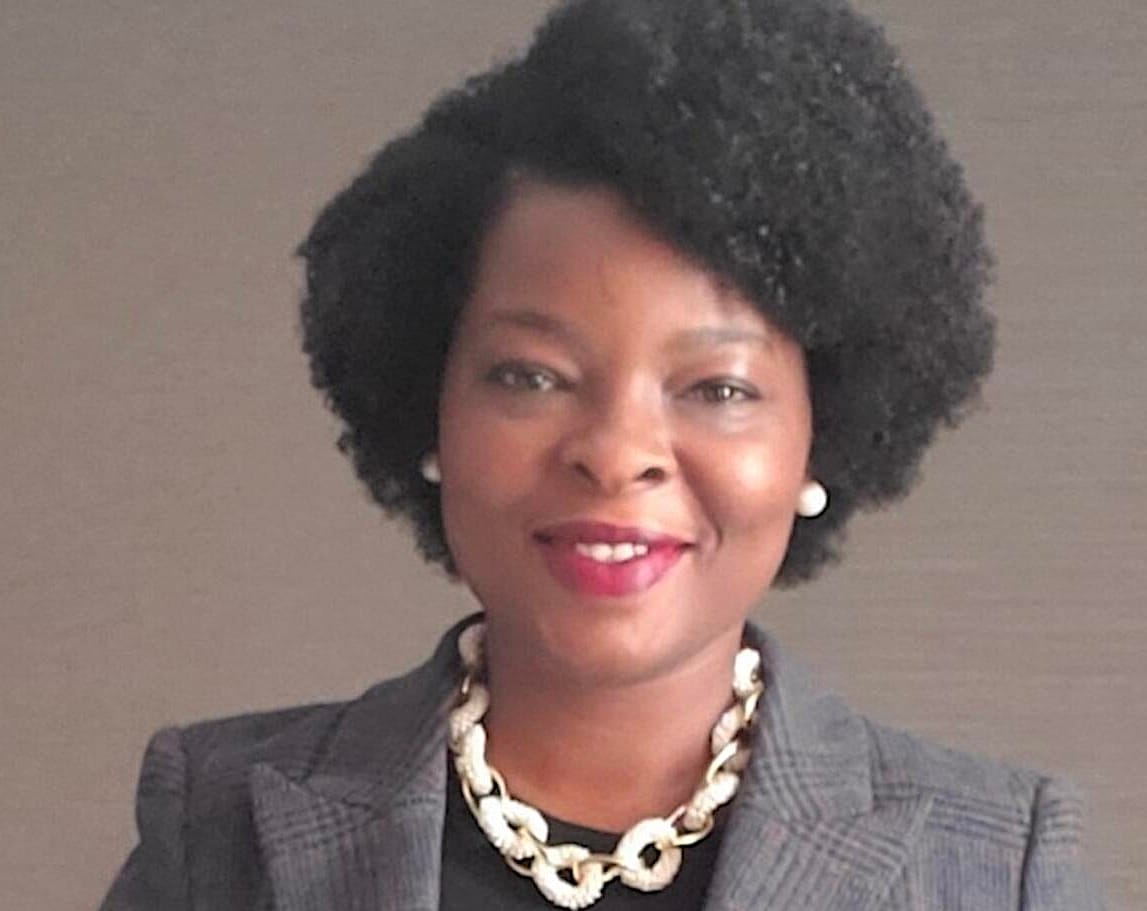
A Bay Area nurse and USF professor detained by ICE in September has been missing from the agency's public detainee database, making it difficult for her attorney to locate her and challenge her detention and possible deportation.
Dr. Ann Lawani, 39, was taken from her Lodi home by US Immigration and Customs Enforcement agents eight weeks ago, leaving behind her 83-year-old father, who has cancer, and a nursing program at the University of San Francisco that she helps oversee. After briefly managing to call her family from a nearby holding facility, she disappeared from the public database used to locate people in ICE custody, as the New York Times reports.
Her siblings and attorney couldn't get answers from the agency about where she had been taken. Three days passed before her family learned she was being held in Louisiana.
Lawani, a Nigerian native who has lived in the United States for 21 years, was reportedly granted legal protection from deportation to Nigeria in 2013 after an immigration judge found she would likely face persecution if returned. According to the Times, she has since maintained a valid work permit, currently valid through 2029. However, the Department of Homeland Security says she was detained because of the deportation order issued that year, without addressing her subsequent legal protection.
Her family, with help from USF in finding an attorney, sought to file a habeas corpus petition to secure her release and challenge her detention. But because they couldn't establish where ICE was holding her, the process became considerably more difficult. Such petitions are normally filed in the federal district where someone is detained.
Her attorney, Natalia Vieira Santanna, filed the petition in the Eastern District of California on September 18, using Lawani's last known location, per the Times. DHS subsequently asked the court to transfer the case to Louisiana, which would have forced Lawani to find new legal representation and restart the proceedings. Vieira opposed the request, arguing that the government should not benefit from concealing her client's whereabouts.
On September 29, a judge rejected the government's request, finding that "no diligent attorney could have known" Lawani was in Louisiana. The judge also barred the government from deporting her while the habeas case is pending and ordered DHS to explain why she should not be released.
Meanwhile, as NBC Bay Area reports, Lawani's colleagues say she was transferred from Stockton to El Paso, Texas, before being moved to the South Louisiana ICE Processing Center, where she remains.
US Representative Josh Harder, D-California, has joined the effort to bring her home, sending a letter to Department of Homeland Security Secretary Markwayne Mullin demanding her immediate return to California and answers about her possible deportation to a third country.
According to KQED, Harder said ICE has pursued Lawani's removal to an undisclosed country without providing her or her attorney with the relevant documentation, raising concerns about due process and the justification for her continued detention.
"This goes against everything ICE has publicly said," Harder said, speaking to NBC Bay Area. "They're saying they are keeping our community safe and prioritizing folks who are threatening public safety. This is exactly the opposite."
The decision to remove certain detainees from ICE's public locator system was announced shortly before Lawani's arrest and applies to people with final deportation orders, per the Times. The policy has reportedly affected tens of thousands of immigrants, with more than 20,000 people, or approximately 30% of all ICE detainees, no longer appearing in the database, according to a lawsuit filed in federal court in Boston last month by the National Immigration Law Center and other organizations.
Immigration attorneys say the change makes it harder to locate clients who are frequently transferred between facilities. Without knowing where someone is being held, lawyers can struggle to challenge deportation orders, reopen immigration cases, or seek release before ICE removes someone from the country.
The National Immigration Law Center and other groups argue that withholding detainees' locations deprives immigrants of due process, particularly because some people with final removal orders still have legal avenues to challenge their deportation, as the Times reports.
Lawani's absence has also affected the university and the students she supervises. She oversees approximately 230 nursing students at USF, leads its master's nursing program, and works weekends in the cardiovascular stroke unit at John Muir Health, per KQED. Her specialty is palliative and hospice care, and she also worked on the front lines during the COVID-19 pandemic.
Eileen K. Fry-Bowers, dean of USF's School of Nursing and Health Professions, said Lawani's continued absence is affecting students, faculty, and the university's nursing curriculum.
"Her continued absence causes real and mounting harm to the students and faculty who rely on her mentorship, to our accreditation-mandated curriculum work, and to the safety-net partnerships she has built," Fry-Bowers said, speaking to KQED.
USF President Salvador Aceves said in an email Tuesday that Lawani and her family initially wanted to keep her detention private but have now decided to make her case public.
Her brother, Samuel Lawani, described the family's experience trying to locate her after her arrest as devastating.
"It was the worst time of my life, knowing she had been siphoned into an abyss and there was nothing I could do about it," he told the Times.
Related: UC Berkeley Student Seeking Asylum Detained by ICE at SFO


